
The role of agroforestry-based community forests in curbing agricultural encroachment in state forests in MyanmarUsing an integrated approach for evaluation

The role of agroforestry-based community forests in curbing agricultural encroachment in state forests in Myanmar
Using an integrated approach for evaluation
 View/
View/Type of Scholarly Publication
DissertationDate of Exam
13.11.2025Date of Publication
30.03.2026Advisor
Schmitt, Christine B.Co-Referee
Biber-Freudenberger, LisaMetadata
Show full item record
Citable Links 
Abstract
In Myanmar, agricultural expansion has caused major deforestation and forest land title loss, leading to irreversible land-use changes that hinder reforestation. To address this issue, the government introduced a policy intervention in 2013. It includes establishing agroforestry-based community forests (ACFs) in encroached state forest areas, allowing farmers to practice agroforestry while securing their land tenure under existing community forestry regulations. Since then, despite questionable conditions for its success, the nationwide implementation of the policy has accelerated without evaluation or scientific evidence. Therefore, this dissertation aims to evaluate the policy focusing on ACF establishment in agricultural encroachment areas in Taungoo district in Myanmar, where forest ecosystems are critically endangered. Managing agricultural expansion and reforestation involves numerous stakeholders and associated social issues, particularly in the subsistence farming context, leading to a complex situation beyond the scope of forestry alone. An integrated approach was adopted for evaluation, involving remote sensing techniques, forest inventory methods, and social research analysis.
Firstly, the study assessed the impact of the policy intervention on agricultural encroachment and forest cover dynamics at the landscape level through land cover change analysis using LANDSAT images from 2010, 2015, and 2020, combined with perception analysis, including social research methods. Secondly, it assessed farmers' participation in ACF implementation using a questionnaire survey and evaluated the performance of different ACF practices by measuring 42 sample plots. Lastly, the study examined farmers' perceived importance of various ecosystem services from ACFs and evaluated their actual contributions through forest inventory data.
The land cover change analysis revealed a consistent decrease in forest cover in the study area over the study period, declining from 62.8% in 2010 to 58.2% in 2015 and 51.9% in 2020. Meanwhile, the agricultural area increased from 9.5% in 2010 to 14.5% in 2015 and 18.5% in 2020. These results indicate that the policy did not effectively reduce agricultural expansion or deforestation, despite variations in land cover change patterns. Additionally, 91% and 97% of respondents reported that the policy neither changed their farming practices nor reduced land clearing or new settlement. Overall, the policy was ineffective in controlling deforestation from agricultural encroachment at the landscape level.
The second part of the study showed low farmer participation in ACFs, with only 79% of respondents implementing them and key factors influencing participation were farm size and knowledge related to ACFs. In the study area, four main ACF practices were identified: (i) boundary planting; (ii) woodlot planting; (iii) planting trees in degraded forest remnants; and (iv) protection of degraded forest remnants. The Forest Department (FD) strongly influenced design and species selection, with low farmer inclusion. Forest inventory results revealed that tree densities in ACF plots did not meet the FD's target of 150 trees per acre (375 trees per hectare).
The final part of the study highlighted an urgent need to enhance the provisioning services of ACFs, given their currently low contributions despite being perceived as highly important by farmers. To encourage active farmer participation, the study suggested offering multipurpose and short-term income-generating tree species to maximize ecosystem services based on farmers' interests, alongside strengthening extension services and knowledge dissemination platforms. The study also recommended that future research adopt an approach integrating diverse disciplinary methods such as remote sensing, forestry, and social research methodologies, which has proven highly beneficial for policy evaluation.
Firstly, the study assessed the impact of the policy intervention on agricultural encroachment and forest cover dynamics at the landscape level through land cover change analysis using LANDSAT images from 2010, 2015, and 2020, combined with perception analysis, including social research methods. Secondly, it assessed farmers' participation in ACF implementation using a questionnaire survey and evaluated the performance of different ACF practices by measuring 42 sample plots. Lastly, the study examined farmers' perceived importance of various ecosystem services from ACFs and evaluated their actual contributions through forest inventory data.
The land cover change analysis revealed a consistent decrease in forest cover in the study area over the study period, declining from 62.8% in 2010 to 58.2% in 2015 and 51.9% in 2020. Meanwhile, the agricultural area increased from 9.5% in 2010 to 14.5% in 2015 and 18.5% in 2020. These results indicate that the policy did not effectively reduce agricultural expansion or deforestation, despite variations in land cover change patterns. Additionally, 91% and 97% of respondents reported that the policy neither changed their farming practices nor reduced land clearing or new settlement. Overall, the policy was ineffective in controlling deforestation from agricultural encroachment at the landscape level.
The second part of the study showed low farmer participation in ACFs, with only 79% of respondents implementing them and key factors influencing participation were farm size and knowledge related to ACFs. In the study area, four main ACF practices were identified: (i) boundary planting; (ii) woodlot planting; (iii) planting trees in degraded forest remnants; and (iv) protection of degraded forest remnants. The Forest Department (FD) strongly influenced design and species selection, with low farmer inclusion. Forest inventory results revealed that tree densities in ACF plots did not meet the FD's target of 150 trees per acre (375 trees per hectare).
The final part of the study highlighted an urgent need to enhance the provisioning services of ACFs, given their currently low contributions despite being perceived as highly important by farmers. To encourage active farmer participation, the study suggested offering multipurpose and short-term income-generating tree species to maximize ecosystem services based on farmers' interests, alongside strengthening extension services and knowledge dissemination platforms. The study also recommended that future research adopt an approach integrating diverse disciplinary methods such as remote sensing, forestry, and social research methodologies, which has proven highly beneficial for policy evaluation.
Subjects
Landbedeckungsänderung, Waldpolitik, Forstliche Governance, Wahrnehmung, Entwaldung, degradierter Wald, Haushaltsmerkmale, Waldökosystemleistungen, land cover change, forest policy, forest governance, perception, deforestation, degraded forest, household characteristics, forest ecosystem services
Classification (DDC)
630 Landwirtschaft, VeterinärmedizinRelated Publications
https://doi.org/10.3390/land13020150https://doi.org/10.1186/s13595-023-01191-x
https://doi.org/10.1016/j.tfp.2026.101272
Supplementary Research Data
https://doi.org/10.5281/zenodo.17877188https://doi.org/10.5281/zenodo.8005342
San, Su Mon: The role of agroforestry-based community forests in curbing agricultural encroachment in state forests in Myanmar : Using an integrated approach for evaluation. - Bonn, 2026. - Dissertation, Rheinische Friedrich-Wilhelms-Universität Bonn.
Online-Ausgabe in bonndoc: https://nbn-resolving.org/urn:nbn:de:hbz:5-89309
Online-Ausgabe in bonndoc: https://nbn-resolving.org/urn:nbn:de:hbz:5-89309
@phdthesis{handle:20.500.11811/14035,
urn: https://nbn-resolving.org/urn:nbn:de:hbz:5-89309,
doi: https://doi.org/10.48565/bonndoc-830,
author = {{Su Mon San}},
title = {The role of agroforestry-based community forests in curbing agricultural encroachment in state forests in Myanmar : Using an integrated approach for evaluation},
school = {Rheinische Friedrich-Wilhelms-Universität Bonn},
year = 2026,
month = mar,
note = {In Myanmar, agricultural expansion has caused major deforestation and forest land title loss, leading to irreversible land-use changes that hinder reforestation. To address this issue, the government introduced a policy intervention in 2013. It includes establishing agroforestry-based community forests (ACFs) in encroached state forest areas, allowing farmers to practice agroforestry while securing their land tenure under existing community forestry regulations. Since then, despite questionable conditions for its success, the nationwide implementation of the policy has accelerated without evaluation or scientific evidence. Therefore, this dissertation aims to evaluate the policy focusing on ACF establishment in agricultural encroachment areas in Taungoo district in Myanmar, where forest ecosystems are critically endangered. Managing agricultural expansion and reforestation involves numerous stakeholders and associated social issues, particularly in the subsistence farming context, leading to a complex situation beyond the scope of forestry alone. An integrated approach was adopted for evaluation, involving remote sensing techniques, forest inventory methods, and social research analysis.
Firstly, the study assessed the impact of the policy intervention on agricultural encroachment and forest cover dynamics at the landscape level through land cover change analysis using LANDSAT images from 2010, 2015, and 2020, combined with perception analysis, including social research methods. Secondly, it assessed farmers' participation in ACF implementation using a questionnaire survey and evaluated the performance of different ACF practices by measuring 42 sample plots. Lastly, the study examined farmers' perceived importance of various ecosystem services from ACFs and evaluated their actual contributions through forest inventory data.
The land cover change analysis revealed a consistent decrease in forest cover in the study area over the study period, declining from 62.8% in 2010 to 58.2% in 2015 and 51.9% in 2020. Meanwhile, the agricultural area increased from 9.5% in 2010 to 14.5% in 2015 and 18.5% in 2020. These results indicate that the policy did not effectively reduce agricultural expansion or deforestation, despite variations in land cover change patterns. Additionally, 91% and 97% of respondents reported that the policy neither changed their farming practices nor reduced land clearing or new settlement. Overall, the policy was ineffective in controlling deforestation from agricultural encroachment at the landscape level.
The second part of the study showed low farmer participation in ACFs, with only 79% of respondents implementing them and key factors influencing participation were farm size and knowledge related to ACFs. In the study area, four main ACF practices were identified: (i) boundary planting; (ii) woodlot planting; (iii) planting trees in degraded forest remnants; and (iv) protection of degraded forest remnants. The Forest Department (FD) strongly influenced design and species selection, with low farmer inclusion. Forest inventory results revealed that tree densities in ACF plots did not meet the FD's target of 150 trees per acre (375 trees per hectare).
The final part of the study highlighted an urgent need to enhance the provisioning services of ACFs, given their currently low contributions despite being perceived as highly important by farmers. To encourage active farmer participation, the study suggested offering multipurpose and short-term income-generating tree species to maximize ecosystem services based on farmers' interests, alongside strengthening extension services and knowledge dissemination platforms. The study also recommended that future research adopt an approach integrating diverse disciplinary methods such as remote sensing, forestry, and social research methodologies, which has proven highly beneficial for policy evaluation.},
url = {https://hdl.handle.net/20.500.11811/14035}
}
urn: https://nbn-resolving.org/urn:nbn:de:hbz:5-89309,
doi: https://doi.org/10.48565/bonndoc-830,
author = {{Su Mon San}},
title = {The role of agroforestry-based community forests in curbing agricultural encroachment in state forests in Myanmar : Using an integrated approach for evaluation},
school = {Rheinische Friedrich-Wilhelms-Universität Bonn},
year = 2026,
month = mar,
note = {In Myanmar, agricultural expansion has caused major deforestation and forest land title loss, leading to irreversible land-use changes that hinder reforestation. To address this issue, the government introduced a policy intervention in 2013. It includes establishing agroforestry-based community forests (ACFs) in encroached state forest areas, allowing farmers to practice agroforestry while securing their land tenure under existing community forestry regulations. Since then, despite questionable conditions for its success, the nationwide implementation of the policy has accelerated without evaluation or scientific evidence. Therefore, this dissertation aims to evaluate the policy focusing on ACF establishment in agricultural encroachment areas in Taungoo district in Myanmar, where forest ecosystems are critically endangered. Managing agricultural expansion and reforestation involves numerous stakeholders and associated social issues, particularly in the subsistence farming context, leading to a complex situation beyond the scope of forestry alone. An integrated approach was adopted for evaluation, involving remote sensing techniques, forest inventory methods, and social research analysis.
Firstly, the study assessed the impact of the policy intervention on agricultural encroachment and forest cover dynamics at the landscape level through land cover change analysis using LANDSAT images from 2010, 2015, and 2020, combined with perception analysis, including social research methods. Secondly, it assessed farmers' participation in ACF implementation using a questionnaire survey and evaluated the performance of different ACF practices by measuring 42 sample plots. Lastly, the study examined farmers' perceived importance of various ecosystem services from ACFs and evaluated their actual contributions through forest inventory data.
The land cover change analysis revealed a consistent decrease in forest cover in the study area over the study period, declining from 62.8% in 2010 to 58.2% in 2015 and 51.9% in 2020. Meanwhile, the agricultural area increased from 9.5% in 2010 to 14.5% in 2015 and 18.5% in 2020. These results indicate that the policy did not effectively reduce agricultural expansion or deforestation, despite variations in land cover change patterns. Additionally, 91% and 97% of respondents reported that the policy neither changed their farming practices nor reduced land clearing or new settlement. Overall, the policy was ineffective in controlling deforestation from agricultural encroachment at the landscape level.
The second part of the study showed low farmer participation in ACFs, with only 79% of respondents implementing them and key factors influencing participation were farm size and knowledge related to ACFs. In the study area, four main ACF practices were identified: (i) boundary planting; (ii) woodlot planting; (iii) planting trees in degraded forest remnants; and (iv) protection of degraded forest remnants. The Forest Department (FD) strongly influenced design and species selection, with low farmer inclusion. Forest inventory results revealed that tree densities in ACF plots did not meet the FD's target of 150 trees per acre (375 trees per hectare).
The final part of the study highlighted an urgent need to enhance the provisioning services of ACFs, given their currently low contributions despite being perceived as highly important by farmers. To encourage active farmer participation, the study suggested offering multipurpose and short-term income-generating tree species to maximize ecosystem services based on farmers' interests, alongside strengthening extension services and knowledge dissemination platforms. The study also recommended that future research adopt an approach integrating diverse disciplinary methods such as remote sensing, forestry, and social research methodologies, which has proven highly beneficial for policy evaluation.},
url = {https://hdl.handle.net/20.500.11811/14035}
}
The following license files are associated with this item:

E-Dissertationen: Related items
Showing items related by title, author, creator and subject.
-
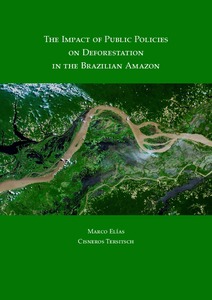
The Impact of Public Policies on Deforestation in the Brazilian Amazon
(2017-07-03)Between 2000 and 2012, 2.3m sq. kilometers of tree cover, equivalent to 6.4 times the size of Germany, were lost globally due to land cover change. Forest loss often comes with significant social and environmental costs. ... -
Forest diversity in fragmented landscapes of northern Ethiopia and implications for conservation
(2011-04-21)Deforestation and habitat fragmentation that arise largely due to the conversion of forests to other agricultural land-use types and over-utilization of forest resources to satisfy the food and energy requirements of the ... -
Sustainability of community forestry enterprises: indigenous wild honey gathering in the UNESCO Man and Biosphere Reserve Palawan, Philippines
(2017-12-12)Commercialization of non-timber forest products has been one of the strategies worldwide for integrated rural poverty alleviation and forest conservation. Through a social-ecological systems approach, this dissertation ...