

Ikat as a Living TraditionVisual Expression, Meaning, and Artistic Transmission in Eastern Indonesia (19th-21st Century)

Ikat as a Living Tradition
Visual Expression, Meaning, and Artistic Transmission in Eastern Indonesia (19th-21st Century)
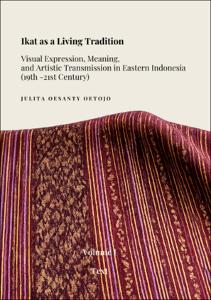
 Volume I: Text (5.7MB)
Art der Hochschulschrift
DissertationPrüfungsdatum
13.05.2026Datum der Veröffentlichung
19.06.2026Erstgutachter
Hegewald, Julia A. B.Zweitgutachter
Antweiler, ChristophMetadaten
Zur Langanzeige
Zitierbare Links 
Inhalt
Ikat textiles from Eastern Indonesia are among the most intricate and symbolically rich forms of material culture in Southeast Asia. This dissertation traces the historical development and transformation of ikat in the regions of Belu, Malaka, and Kupang, located on the Indonesian side of the island of West Timor, areas that, despite their cultural significance, have received relatively limited scholarly attention. Drawing on some of the earliest documented examples from late nineteenth- and early twentieth-century museum collections and archival photographs, the study examines how ikat, traditionally embedded in life-cycle rituals and ancestral offerings, has undergone substantial shifts in meaning, form, and usage from the late nineteenth century to the present, shaped by changes in material resources, ritual practices, colonial encounters, and increasing connections with global audiences.
To understand these transformations, two analytical concepts are introduced: sacred flexibility and the web of significance. Sacred Flexibility redefines how sacredness is preserved, not as something fixed in ancestral techniques or materials, but as something flexible and adaptable, maintained through artisans' creative decisions, even when working with synthetic dyes or altered ritual settings. The Web of Significance, adapted from Clifford Geertz, an anthropologist known for his interpretive approach to culture, provides a visual-analytical framework for interpreting ikat motifs as symbolic codes that express ancestral knowledge, social identity, and evolving contemporary meanings. These concepts position artisans not as neutral preservers of tradition but as active cultural thinkers and creative authors of visual language.
Methodologically, the research applies an interdisciplinary approach that integrates visual, contextual, and ethnographic perspectives to explore ikat's ritual, social, and material dimensions. Fieldwork was conducted between 2022 and 2023 in Belu, Malaka, and Kupang, supported by earlier data from 2019 gathered through online research and virtual interviews. This approach highlights artisans' agency in shaping design, technique, and motif composition, linking art historical analysis with practice-based approaches informed by indigenous knowledge and cultural agency.
The key contribution of this study lies in reframing ikat as a living tradition rather than a static or purely ethnographic practice. It positions ikat as a textile form that holds and reshapes cultural memory across generations, sustaining its relevance while adapting to new contexts. By focusing on the creative strategies of artisans, particularly women, the dissertation offers new tools for analysing visual practices across regional and global contexts, contributing to a deeper scholarly understanding of the artistic and cultural significance of ikat within the field of art history.
To understand these transformations, two analytical concepts are introduced: sacred flexibility and the web of significance. Sacred Flexibility redefines how sacredness is preserved, not as something fixed in ancestral techniques or materials, but as something flexible and adaptable, maintained through artisans' creative decisions, even when working with synthetic dyes or altered ritual settings. The Web of Significance, adapted from Clifford Geertz, an anthropologist known for his interpretive approach to culture, provides a visual-analytical framework for interpreting ikat motifs as symbolic codes that express ancestral knowledge, social identity, and evolving contemporary meanings. These concepts position artisans not as neutral preservers of tradition but as active cultural thinkers and creative authors of visual language.
Methodologically, the research applies an interdisciplinary approach that integrates visual, contextual, and ethnographic perspectives to explore ikat's ritual, social, and material dimensions. Fieldwork was conducted between 2022 and 2023 in Belu, Malaka, and Kupang, supported by earlier data from 2019 gathered through online research and virtual interviews. This approach highlights artisans' agency in shaping design, technique, and motif composition, linking art historical analysis with practice-based approaches informed by indigenous knowledge and cultural agency.
The key contribution of this study lies in reframing ikat as a living tradition rather than a static or purely ethnographic practice. It positions ikat as a textile form that holds and reshapes cultural memory across generations, sustaining its relevance while adapting to new contexts. By focusing on the creative strategies of artisans, particularly women, the dissertation offers new tools for analysing visual practices across regional and global contexts, contributing to a deeper scholarly understanding of the artistic and cultural significance of ikat within the field of art history.
Schlagwörter
Ikat, Textilien, Westtimor, Materielle Kultur, Kulturerbe, ikat textiles, West Timor, art history, material culture, textile heritage, cultural memory
Klassifikation (DDC)
700 Künste, Bildende Kunst allgemeinOetojo, Julita Oesanty: Ikat as a Living Tradition : Visual Expression, Meaning, and Artistic Transmission in Eastern Indonesia (19th-21st Century). - Bonn, 2026. - Dissertation, Rheinische Friedrich-Wilhelms-Universität Bonn.
Online-Ausgabe in bonndoc: https://nbn-resolving.org/urn:nbn:de:hbz:5-90702
Online-Ausgabe in bonndoc: https://nbn-resolving.org/urn:nbn:de:hbz:5-90702
@phdthesis{handle:20.500.11811/14226,
urn: https://nbn-resolving.org/urn:nbn:de:hbz:5-90702,
doi: https://doi.org/10.48565/bonndoc-892,
author = {{Julita Oesanty Oetojo}},
title = {Ikat as a Living Tradition : Visual Expression, Meaning, and Artistic Transmission in Eastern Indonesia (19th-21st Century)},
school = {Rheinische Friedrich-Wilhelms-Universität Bonn},
year = 2026,
month = jun,
note = {Ikat textiles from Eastern Indonesia are among the most intricate and symbolically rich forms of material culture in Southeast Asia. This dissertation traces the historical development and transformation of ikat in the regions of Belu, Malaka, and Kupang, located on the Indonesian side of the island of West Timor, areas that, despite their cultural significance, have received relatively limited scholarly attention. Drawing on some of the earliest documented examples from late nineteenth- and early twentieth-century museum collections and archival photographs, the study examines how ikat, traditionally embedded in life-cycle rituals and ancestral offerings, has undergone substantial shifts in meaning, form, and usage from the late nineteenth century to the present, shaped by changes in material resources, ritual practices, colonial encounters, and increasing connections with global audiences.
To understand these transformations, two analytical concepts are introduced: sacred flexibility and the web of significance. Sacred Flexibility redefines how sacredness is preserved, not as something fixed in ancestral techniques or materials, but as something flexible and adaptable, maintained through artisans' creative decisions, even when working with synthetic dyes or altered ritual settings. The Web of Significance, adapted from Clifford Geertz, an anthropologist known for his interpretive approach to culture, provides a visual-analytical framework for interpreting ikat motifs as symbolic codes that express ancestral knowledge, social identity, and evolving contemporary meanings. These concepts position artisans not as neutral preservers of tradition but as active cultural thinkers and creative authors of visual language.
Methodologically, the research applies an interdisciplinary approach that integrates visual, contextual, and ethnographic perspectives to explore ikat's ritual, social, and material dimensions. Fieldwork was conducted between 2022 and 2023 in Belu, Malaka, and Kupang, supported by earlier data from 2019 gathered through online research and virtual interviews. This approach highlights artisans' agency in shaping design, technique, and motif composition, linking art historical analysis with practice-based approaches informed by indigenous knowledge and cultural agency.
The key contribution of this study lies in reframing ikat as a living tradition rather than a static or purely ethnographic practice. It positions ikat as a textile form that holds and reshapes cultural memory across generations, sustaining its relevance while adapting to new contexts. By focusing on the creative strategies of artisans, particularly women, the dissertation offers new tools for analysing visual practices across regional and global contexts, contributing to a deeper scholarly understanding of the artistic and cultural significance of ikat within the field of art history.},
url = {https://hdl.handle.net/20.500.11811/14226}
}
urn: https://nbn-resolving.org/urn:nbn:de:hbz:5-90702,
doi: https://doi.org/10.48565/bonndoc-892,
author = {{Julita Oesanty Oetojo}},
title = {Ikat as a Living Tradition : Visual Expression, Meaning, and Artistic Transmission in Eastern Indonesia (19th-21st Century)},
school = {Rheinische Friedrich-Wilhelms-Universität Bonn},
year = 2026,
month = jun,
note = {Ikat textiles from Eastern Indonesia are among the most intricate and symbolically rich forms of material culture in Southeast Asia. This dissertation traces the historical development and transformation of ikat in the regions of Belu, Malaka, and Kupang, located on the Indonesian side of the island of West Timor, areas that, despite their cultural significance, have received relatively limited scholarly attention. Drawing on some of the earliest documented examples from late nineteenth- and early twentieth-century museum collections and archival photographs, the study examines how ikat, traditionally embedded in life-cycle rituals and ancestral offerings, has undergone substantial shifts in meaning, form, and usage from the late nineteenth century to the present, shaped by changes in material resources, ritual practices, colonial encounters, and increasing connections with global audiences.
To understand these transformations, two analytical concepts are introduced: sacred flexibility and the web of significance. Sacred Flexibility redefines how sacredness is preserved, not as something fixed in ancestral techniques or materials, but as something flexible and adaptable, maintained through artisans' creative decisions, even when working with synthetic dyes or altered ritual settings. The Web of Significance, adapted from Clifford Geertz, an anthropologist known for his interpretive approach to culture, provides a visual-analytical framework for interpreting ikat motifs as symbolic codes that express ancestral knowledge, social identity, and evolving contemporary meanings. These concepts position artisans not as neutral preservers of tradition but as active cultural thinkers and creative authors of visual language.
Methodologically, the research applies an interdisciplinary approach that integrates visual, contextual, and ethnographic perspectives to explore ikat's ritual, social, and material dimensions. Fieldwork was conducted between 2022 and 2023 in Belu, Malaka, and Kupang, supported by earlier data from 2019 gathered through online research and virtual interviews. This approach highlights artisans' agency in shaping design, technique, and motif composition, linking art historical analysis with practice-based approaches informed by indigenous knowledge and cultural agency.
The key contribution of this study lies in reframing ikat as a living tradition rather than a static or purely ethnographic practice. It positions ikat as a textile form that holds and reshapes cultural memory across generations, sustaining its relevance while adapting to new contexts. By focusing on the creative strategies of artisans, particularly women, the dissertation offers new tools for analysing visual practices across regional and global contexts, contributing to a deeper scholarly understanding of the artistic and cultural significance of ikat within the field of art history.},
url = {https://hdl.handle.net/20.500.11811/14226}
}
Die folgenden Nutzungsbestimmungen sind mit dieser Ressource verbunden: